How to Create Your Own Cryptocurrency Token in 2026: No-Code, Solana & Launch Guide
Learn how to create your own cryptocurrency token in 2026, choose between a coin and token, plan tokenomics, launch on Solana, add liquidity, and secure authorities.
How to Create Your Own Cryptocurrency Token in 2026
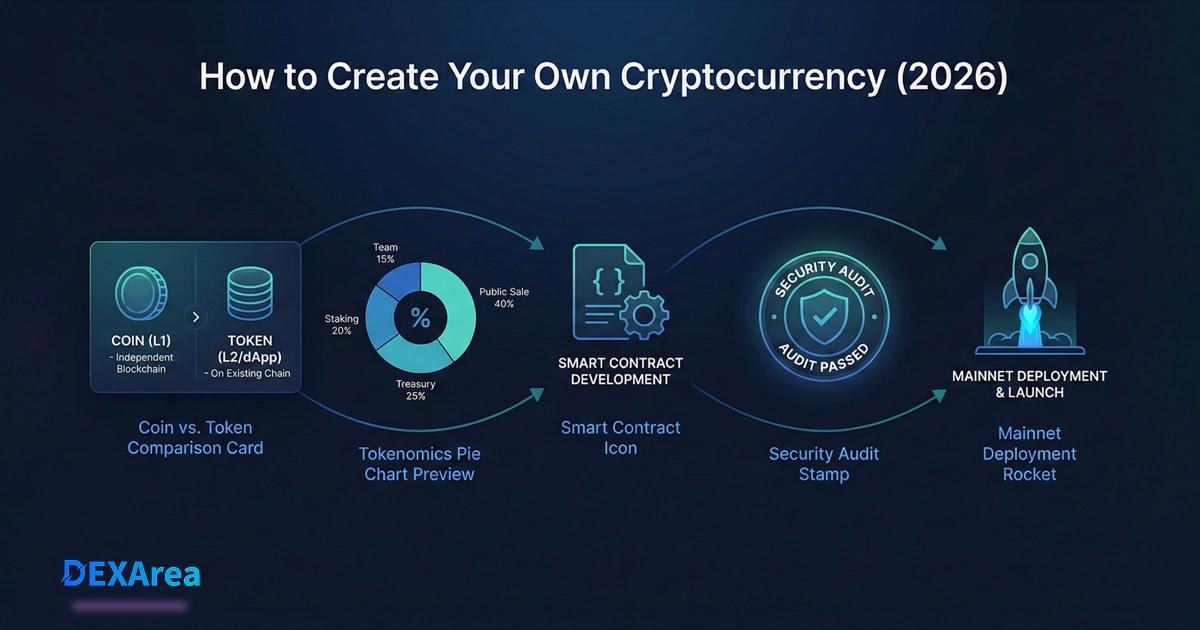
Creating your own cryptocurrency in 2026 usually does not mean building a new blockchain from scratch. For most founders, creators, communities, and Solana builders, the practical path is simpler: create a token on an existing blockchain, define clear tokenomics, publish metadata, add liquidity, and secure the token authorities before launch.
If your real goal is to launch a tradeable digital asset, community token, utility token, or project token, you probably want to create a token, not a coin. That distinction matters because it changes the cost, timeline, technical difficulty, and launch risk.
TL;DR
The fastest way to create your own cryptocurrency is to launch a token on an existing blockchain such as Solana. A token can be created with a no-code Solana token creator, while a coin requires building or maintaining an entire blockchain network. For most projects, start with a token, test everything, add liquidity only when ready, and revoke unnecessary authorities before promoting the launch.
- Token Creator— Create SPL or Token-2022 tokens
- Update Metadata— Modify token name, symbol, or URI
- Create Liquidity Pool— Create a Raydium liquidity pool
- Add Liquidity— Add liquidity to an existing pool
- Revoke Mint Authority— Permanently revoke minting capability
- Revoke Freeze Authority— Remove ability to freeze accounts
- Make Immutable— Make token metadata permanent
Cryptocurrency vs Token: What Are You Actually Creating?
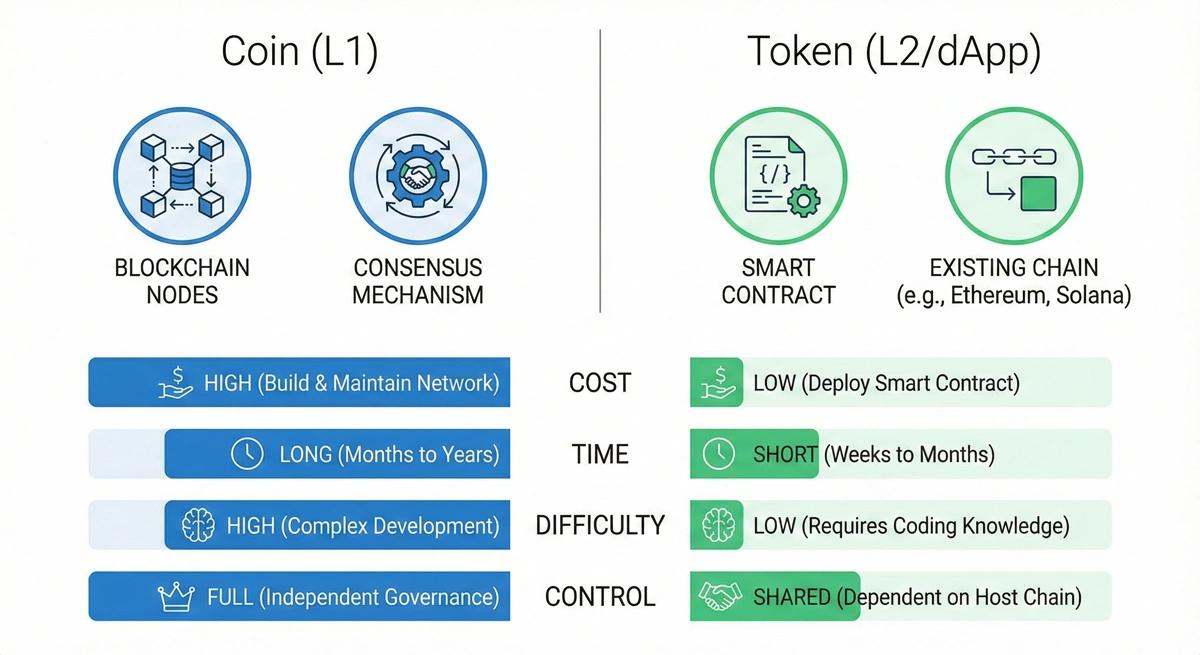
People often search for “how to create a cryptocurrency,” but the word cryptocurrency can mean two very different things.
Option 1: Create a Coin
A coin is the native asset of its own blockchain. Bitcoin has BTC. Ethereum has ETH. Solana has SOL.
Creating a new coin usually means creating or forking a blockchain network. You need validators or miners, consensus rules, RPC infrastructure, explorers, wallets, security monitoring, and long-term maintenance. This is expensive, slow, and usually unnecessary unless your project needs its own base layer.
Option 2: Create a Token
A token is issued on an existing blockchain. On Solana, tokens are commonly created using the SPL Token standard or Token-2022. On Ethereum and EVM chains, tokens are often ERC-20 contracts.
For most real launches, a token is the better choice because you inherit the existing chain’s speed, wallets, tooling, and user base. You focus on the asset, tokenomics, metadata, distribution, liquidity, and security instead of trying to convince the world to run another blockchain node. Humanity already has enough infrastructure nobody asked for.
Why Solana Is a Practical Choice for Creating a Token
Solana is popular for token launches because transactions are fast, fees are low, and wallets like Phantom, Solflare, Backpack, and other Solana-compatible wallets are widely used by traders and builders.
For a token creator, Solana is useful because you can:
- Create an SPL token without writing a smart contract
- Add token metadata such as name, symbol, logo, and description
- Mint an initial supply
- Choose decimals
- Create a liquidity pool
- Distribute tokens to multiple wallets
- Revoke mint or freeze authority for trust
- Manage token operations from a wallet-controlled, non-custodial flow
If your target users are Solana traders, meme coin communities, DeFi users, or fast-launch token projects, creating a Solana token is usually more practical than launching on a slow or expensive network.
Step 1: Define the Purpose of Your Token
Before touching any token creator, decide what the token is supposed to do.
Common token purposes include:
- Community token: used for a brand, creator, meme, or social movement
- Utility token: used for access, payments, rewards, or product features
- Governance token: used for voting or protocol decisions
- Reward token: distributed to users, contributors, or liquidity providers
- Launch token: used to bootstrap attention, liquidity, and market discovery
A weak token purpose creates weak trust. If users cannot understand why the token exists, they will assume the answer is “because someone wanted liquidity exit buttons.” This assumption is not always unfair.
Your purpose should answer:
- Who is the token for?
- Why should anyone hold or use it?
- What happens after launch day?
- Is the token meant for utility, community, governance, speculation, or a mix?
Step 2: Plan Tokenomics Before Creating the Token
Tokenomics is the economic design of your token. It affects supply, trust, trading behavior, distribution, and long-term credibility.
Plan these before deployment:
Total Supply
Choose the maximum initial supply carefully. A supply of 1 billion, 10 billion, or 1 trillion may look familiar in meme coin markets, but supply alone does not create value. Market cap, liquidity, holder distribution, and demand matter more.
Decimals
Decimals define how divisible your token is. Many Solana tokens use 6 or 9 decimals. Higher decimals allow smaller units, but the right choice depends on how the token will be priced, traded, and displayed.
Distribution
Decide how tokens will be allocated:
- Team or founder allocation
- Treasury
- Community rewards
- Airdrops
- Liquidity pool
- Marketing
- Partnerships
- Future ecosystem incentives
Avoid suspicious allocations where one wallet controls most supply without explanation. Traders check this. Bots check this. Everyone checks this. The chain has receipts, which is awkward for people who enjoy pretending otherwise.
Minting Policy
Decide whether the supply should be fixed or mintable.
A mintable token allows the mint authority to create more supply later. This can be useful for rewards or controlled inflation, but it can also reduce trust if holders fear the supply can be inflated without warning.
Liquidity Strategy
If the token will be tradable, plan how much liquidity you will add and where. On Solana, many projects create liquidity pools through Raydium or other DEX infrastructure.
Step 3: Create the Token
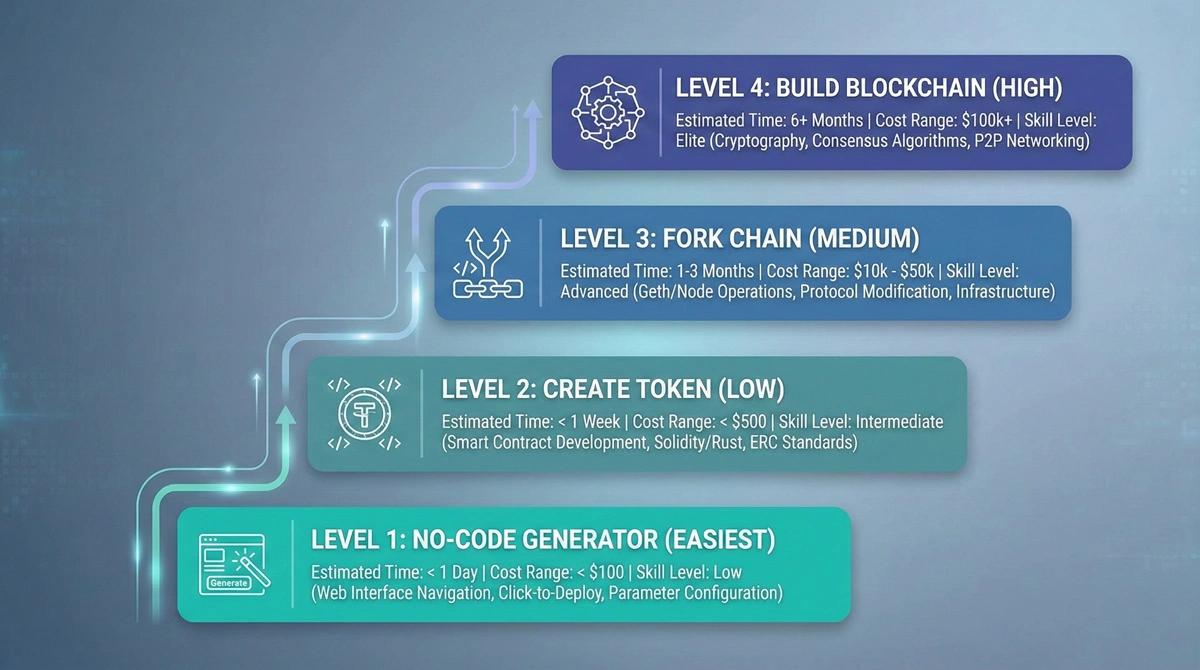
There are three common ways to create a token.
Method 1: No-Code Token Creator
A no-code token creator is the fastest option. You fill in the token details, connect your wallet, review the transaction, and sign it from your wallet.
Typical fields include:
- Token name
- Token symbol
- Decimals
- Initial supply
- Token image
- Description
- Website/social links, when supported
- Token program choice, when available
- Authority settings
This is the best route for most creators who want to launch quickly and avoid command-line mistakes.
Method 2: CLI or SDK
Developers can create tokens using Solana CLI tools or SDKs. This gives more control, but it also gives you more ways to break things in highly creative and expensive ways.
This method is better if you need automation, custom integrations, or programmatic token creation.
Method 3: Custom Smart Contract or Program
On Solana, standard SPL tokens do not require custom smart contracts in the same way ERC-20 tokens do. However, advanced projects may build custom programs or Token-2022 extensions for special behavior.
Use this route only if the standard token model is not enough.
Step 4: Add Metadata
Metadata makes your token recognizable in wallets, explorers, and token lists. It usually includes:
- Token name
- Symbol
- Logo image
- Description
- Website
- Social links
Bad metadata makes even a legitimate token look unfinished. A missing logo, typo in the symbol, or broken image URL can damage trust immediately.
Step 5: Test Before Mainnet Promotion
Before you promote the token publicly, test the full flow:
- Create the token on devnet if possible
- Check the token name, symbol, image, and decimals
- Confirm mint supply is correct
- Send a small amount to another wallet
- Test wallet display
- Test adding liquidity with a small amount
- Check all links and metadata URLs
- Verify authority settings
Do not wait until after launch to discover that your decimals are wrong or your logo URL is broken. That is not “early-stage startup energy.” That is avoidable chaos wearing sunglasses.
Step 6: Secure Token Authorities
Solana token authorities affect how much control remains after launch. This is one of the most important trust signals for token creators.
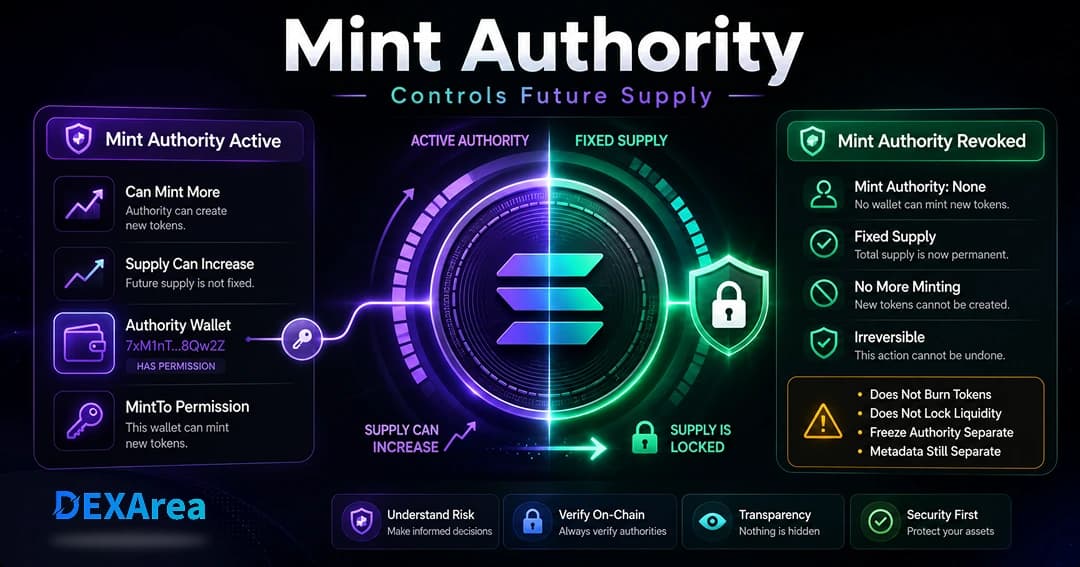
Mint Authority
Mint authority controls whether more tokens can be minted. If you keep mint authority, users may worry that you can inflate supply later.
For fixed-supply launches, many creators revoke mint authority after minting the intended supply.
Freeze Authority
Freeze authority can freeze token accounts. This can be useful in some controlled environments, but for public meme tokens or open-market tokens, it may worry traders.
Update Authority
Update authority controls whether token metadata can be changed. Some projects keep it for branding fixes. Others revoke or transfer it for trust.
Do not revoke blindly
Revoking authority is usually permanent. Check token name, symbol, image, supply, decimals, and metadata before revoking mint, freeze, or update authority. Security theater is bad, but irreversible mistakes are worse.
Step 7: Add Liquidity and Prepare Trading
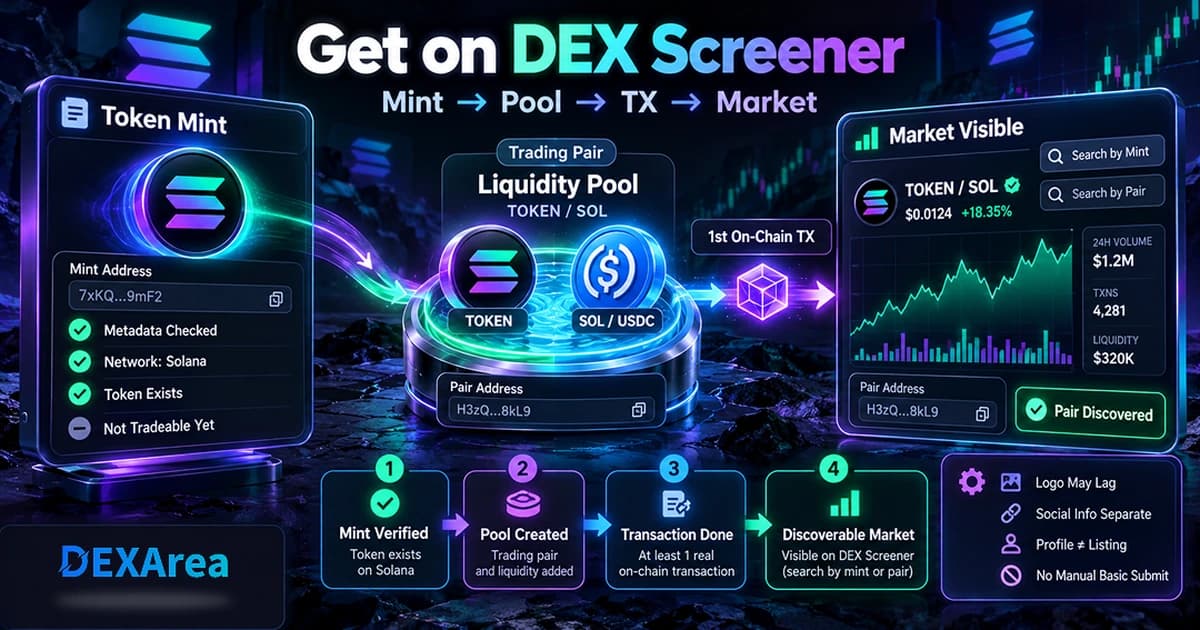
If your token is meant to trade, you need liquidity. A liquidity pool lets users buy and sell your token against another asset such as SOL or a stablecoin.
A basic liquidity launch usually includes:
- Create the token
- Mint the launch supply
- Create a liquidity pool
- Add token + SOL liquidity
- Verify pool visibility
- Announce the token contract address
- Monitor trading, holders, and liquidity
You should also publish clear information about:
- Token mint address
- Pool address
- Initial liquidity
- Supply
- Revoked authorities
- Official website and socials
This helps users avoid fake tokens and copycat pools.
Step 8: Distribute Tokens
After creating your token, you may want to distribute it to users, contributors, early supporters, or marketing wallets.
Common distribution methods:
- Manual transfers
- Airdrops
- Multisender tools
- Claim campaigns
- Vesting contracts or controlled treasury wallets
Step 9: Publish a Trust Checklist
A serious launch should make verification easy. Add a launch checklist to your website, docs, pinned post, or announcement.
Include:
- Token mint address
- Token name and symbol
- Official creator wallet or deployer wallet, if relevant
- Token supply
- Decimals
- Liquidity pool link
- Authority status
- Metadata status
- Official links
- Risk disclaimer
How Much Does It Cost to Create a Cryptocurrency Token?
The cost depends on your method.
Typical cost categories include:
- Network fees
- Token creation service fee, if using a tool
- Metadata/image hosting
- Liquidity amount
- Website or landing page
- Design and branding
- Security review
- Marketing and community operations
Creating the token itself is usually cheap compared with launching it properly. The expensive parts are liquidity, credibility, distribution, and attention. Naturally, those are also the parts people try to skip, because humans enjoy being surprised by predictable failures.
Common Mistakes to Avoid
Choosing the Wrong Decimals
Decimals affect how the token is displayed and transferred. Pick carefully before launch.
Keeping Mint Authority Without Explanation
If mint authority remains active, explain why. Otherwise, users may assume supply can be inflated.
Adding Liquidity Too Early
Do not create a trading pool before metadata, supply, and authority settings are verified.
Using Confusing Token Names
Avoid names or symbols that look like another project unless you enjoy trust problems and angry messages.
Not Publishing the Mint Address
Always publish the official mint address. Token names and symbols can be copied. Mint addresses identify the actual token.
Ignoring Legal Risk
Creating a token is one thing. Selling it, promoting it as an investment, raising funds, or promising returns is another. Talk to a qualified legal professional before public fundraising or investment-style marketing.
Not financial or legal advice
This guide is for educational purposes only. Creating or launching a token can involve technical, financial, regulatory, and market risk. Always review your local rules and get qualified legal advice before fundraising, selling tokens, or making investment-related claims.
FAQ
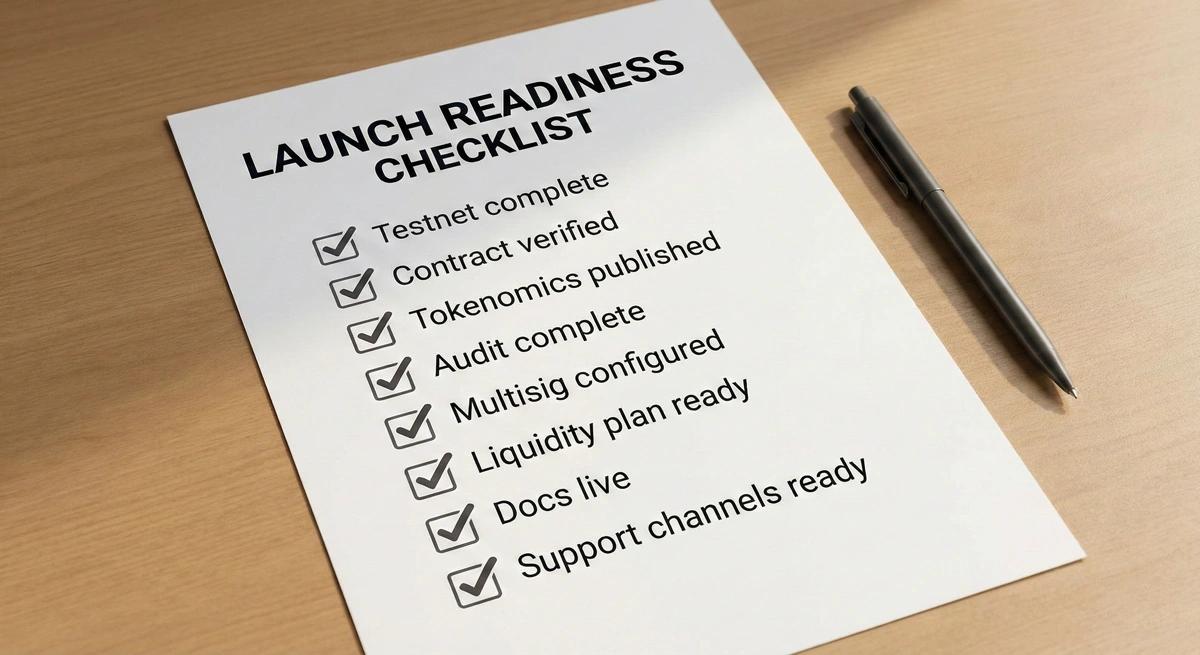
Final Checklist Before Launch
Before you announce your token, confirm:
- Token name and symbol are correct
- Decimals are correct
- Initial supply is correct
- Metadata image loads correctly
- Website and social links are correct
- Mint address is published
- Mint authority is reviewed or revoked
- Freeze authority is reviewed or revoked
- Liquidity plan is ready
- Token distribution plan is clear
- Risk disclaimer is published